
KAREN D. HAMEL, CSP, CIT

Proven Secondary Containment Solutions – Without the Cement Walls
Why Portable Secondary Containment Matters
Secondary containment structures are built with sound logic. You’ve got a permanent location, and your tanks aren’t moving. So, building an adequately-sized pool around them makes sense because it will prevent leaks or spills from getting into the environment.
Few would argue secondary containment systems don’t work. They’ve proven themselves countless times, all over the world. They’ve even got compliance specifications in multiple EPA regulations.
But, what if you’re at a temporary site, or your facility is still growing, or your needs change from project to project? None of these situations negate the need for secondary containment, but building a traditional concrete secondary containment structure may not make the most sense. It would also probably take a huge bite out of your budget. And, it would create a lot of waste at the end of a project, or when a growing facility’s needs change.
So, how do you get the benefits of a secondary containment system without the permanency of four concrete walls? Fortunately, portable secondary containment systems offer the same coverage, at a lower cost, and with more flexibility.
Advantages of Portable Secondary Containment Systems
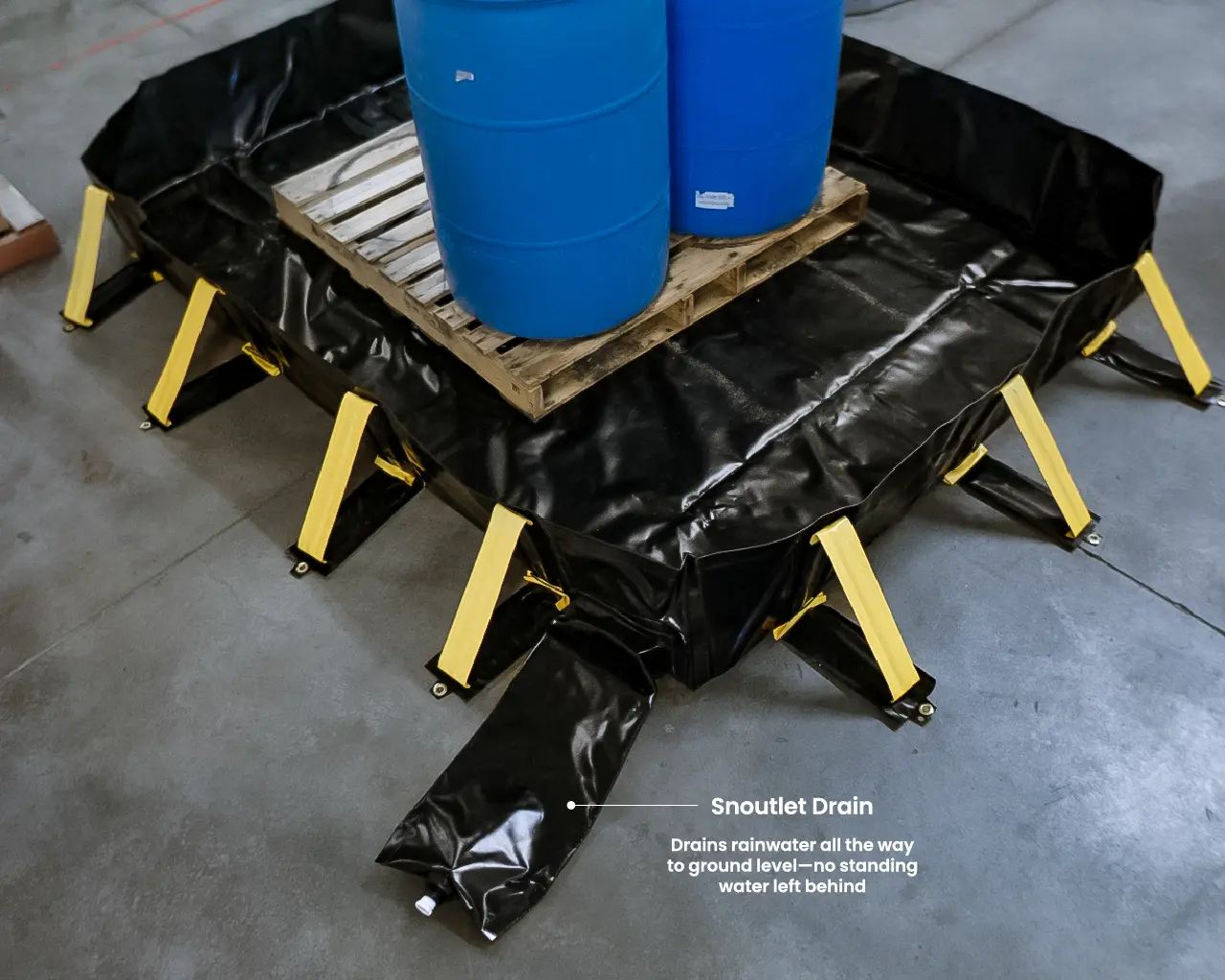
Portable Secondary Containment Systems can be placed indoors or out. They don’t take up a ton of room in storage. They move from job to job. They expand with your business needs. They give you options.
1) Quick Deployment for Job Sites and Temporary Storage
Originally marketed for construction sites, use of portable containment pools has expanded greatly. Now, portable systems can be found in outdoor storage areas, at substations, in permanent facilities, in transportation hubs and in military operations – just to mention a few places.
Anywhere you need to provide secondary containment, without the time, expense and hassle of building traditional concrete systems; portable secondary containment may be a quick win. They also give you the flexibility to relocate storage areas in minutes, not days.
2) Compact, Portable & Easy to Store
3) Flexible Uses: Drums, Totes, Equipment & Vehicles
Use of flexible containment systems has also expanded beyond containing potential leaks from drums and totes. Equipment, hydraulic tools and even entire fleets can be kept in check: preventing pollution and making leak and spill cleanup faster and easier.
After purchasing a portable unit for a specific need, most organizations soon discover several subsequent uses. For example, they purchase the unit for temporary storage of raw materials needed for a specific project, then find that it will be ideal for additional waste storage following a lab cleanout.
4) Long-Term Cost Savings
When properly used and maintained, portable secondary containment pools can last up to 10 years in the field. So, they can be taken from job to job, site to site, project to project for years to come – eliminating the need to build secondary containment areas at each site.
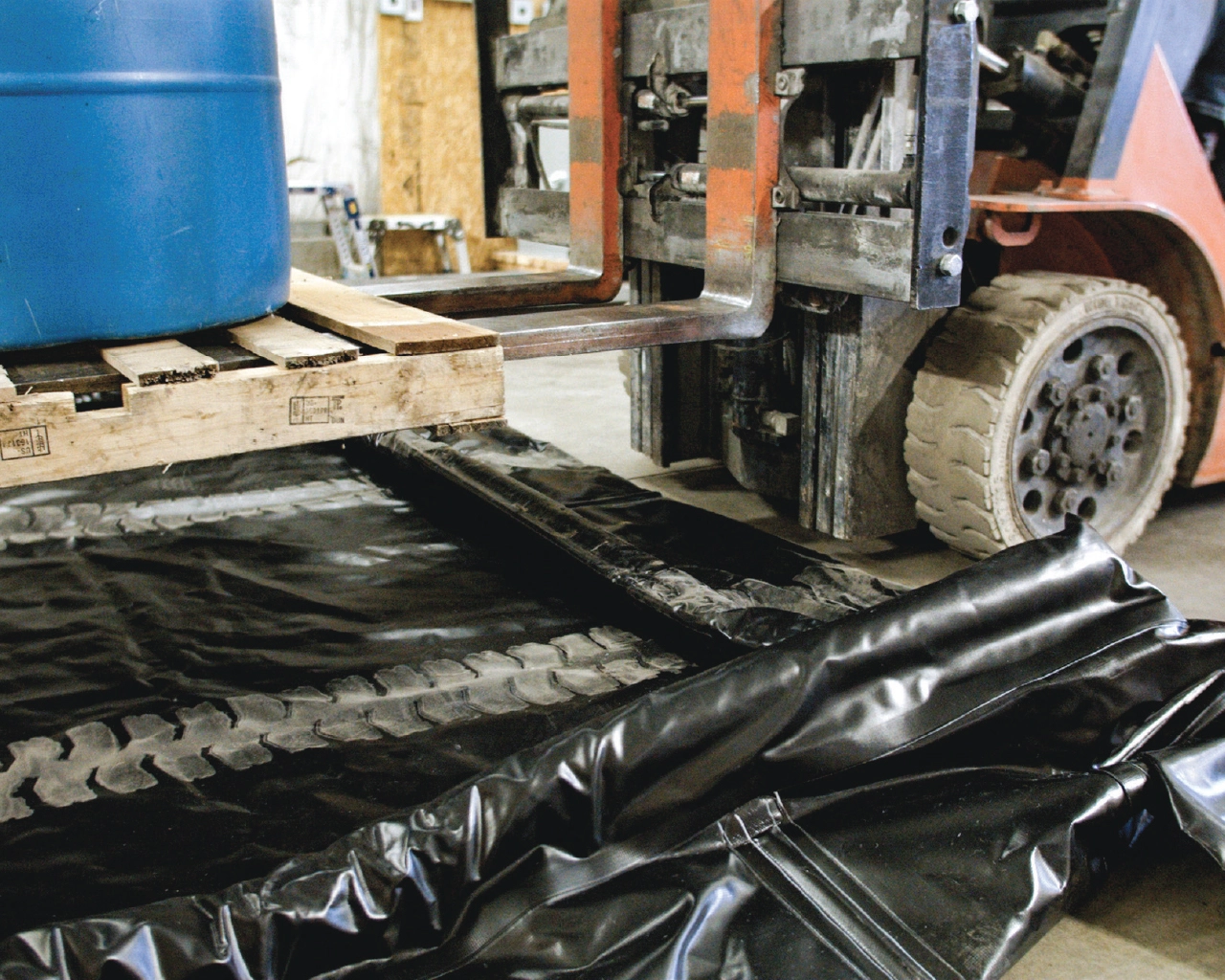
5) Better Ergonomics for Daily Operations
6) Improved Spill Response & Containment
How to Choose the Right Portable Secondary Containment Berm
When selecting a portable secondary containment system, consider the following parameters:

Need More Help?
We’ve put thousands of these into service in all sorts of applications. (My personal favorite was an airplane-shaped one used for deicing operations.) Not sure which one you need? Give us a call at 814-822-2004 — or click the button below to try our Containment Finder. Just choose your site conditions and get an instant product recommendation.
Related Articles
