
KAREN D. HAMEL, CSP, CIT
High Zinc in Your Stormwater? Common Sources and Practical Ways to Reduce It
If your facility received a stormwater sampling result showing elevated zinc, you’re not alone. Zinc is one of the most common heavy metals found in industrial stormwater runoff, and many facilities exceed benchmark levels without realizing where it’s coming from.
The good news is that zinc often originates from common outdoor galvanized surfaces—not manufacturing processes—and practical Best Management Practices (BMPs) can help reduce zinc before runoff reaches storm drains and outfalls.
Understanding the likely sources of zinc is the first step toward selecting the right stormwater treatment strategy.
Why Zinc Shows Up in Industrial Stormwater
A majority of facilities subject to Industrial Stormwater Regulations are governed under federal or state Multi-Sector General Permits (MSGP) that require regular and/or frequent grab samples during storm events.
Depending upon the industry type, these samples may only need to be visually inspected for factors such as color, odor, clarity, solids, foam, and oil sheen. However, some industry sectors must also test for other pollutants, including heavy metals. Zinc is one of the heavy metals in the battery of tests and one of the most common pollutants found in industrial stormwater runoff.
Common Sources of Zinc in Stormwater
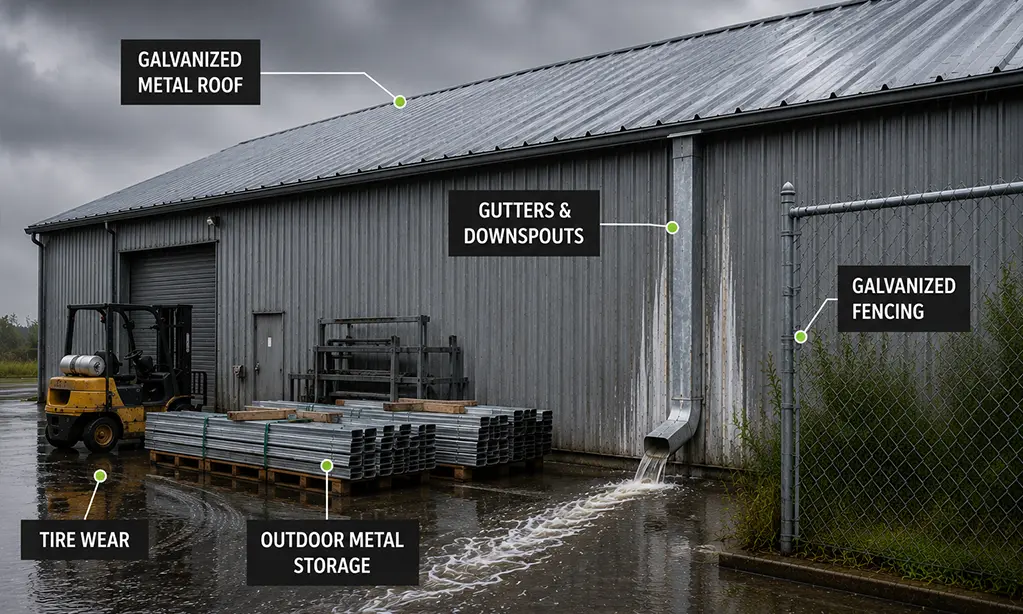
The dissolved zinc that ends up in stormwater runoff isn’t usually from industrial processes or outdoor raw material piles. Galvanized surfaces exposed to the weather are most often the source.
Common galvanized materials include:
The amount of zinc that ends up in stormwater depends upon a number of factors but can sometimes contribute up to 400–500 µg/L or more of dissolved zinc or zinc dust into stormwater discharges. This is well above the limits for most states and municipalities.
As a reference, the Federal EPA Multi-Sector General Permit benchmark for zinc ranges from 0.037 to 0.260 mg/L, depending upon the hardness of the receiving water.
Why Metal Roofs Often Contribute the Most Zinc
Because galvanized metal roofs have a large surface area, they tend to contribute a greater pollutant load to stormwater than other sources.
Some of the factors that determine how much dissolved zinc may end up in stormwater include:
- The age of the roof
- The pH of rainfall
- The intensity of the rainfall
- Surface temperature of the roof
- Duration of the rain even
Chain-Link Fences Can Also Increase Zinc Levels
How to Reduce Zinc in Stormwater
Site-specific facility Stormwater Pollution Prevention Plans (SWPPPs) document sources of water pollution and the control measures used to prevent those pollutants from entering receiving waterways.
These control measures are called Best Management Practices (BMPs).
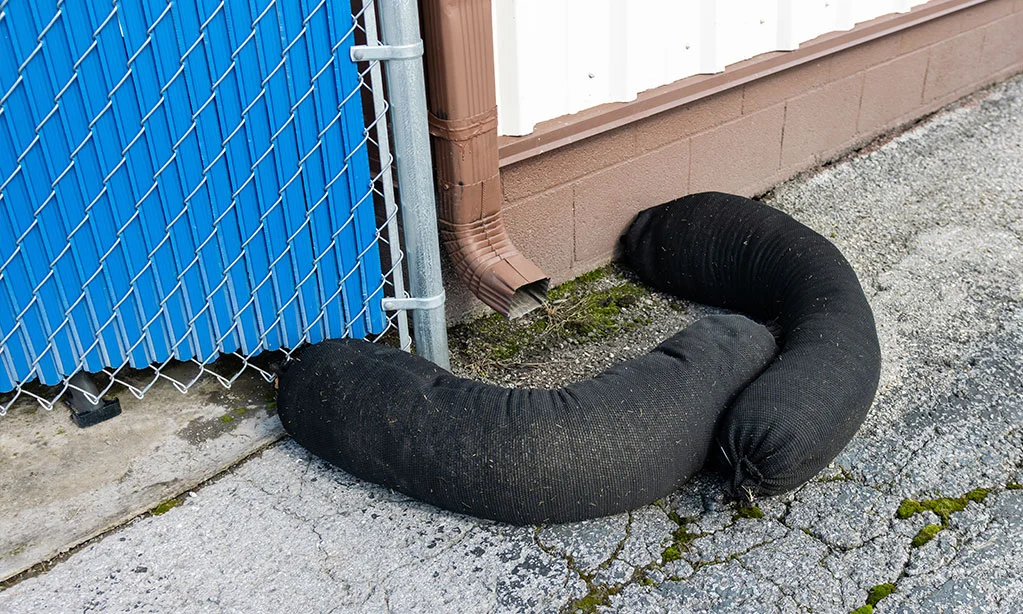
When zinc originates from metal roofs, fencing, downspouts, or other galvanized structures, eliminating the source often isn’t practical. Instead, treating runoff at downspouts, storm drains, and outfalls before it leaves the site is often a practical and effective approach.
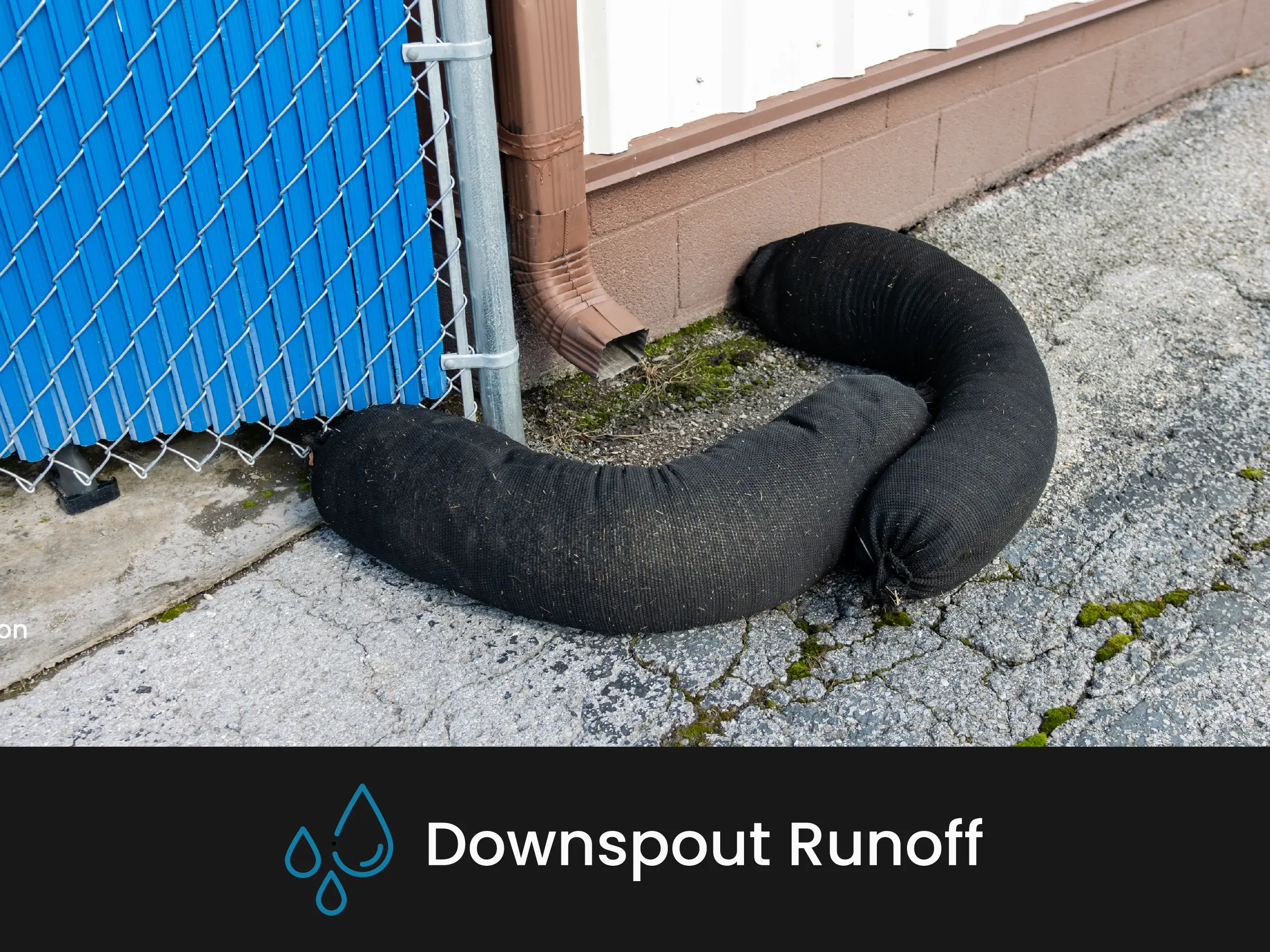
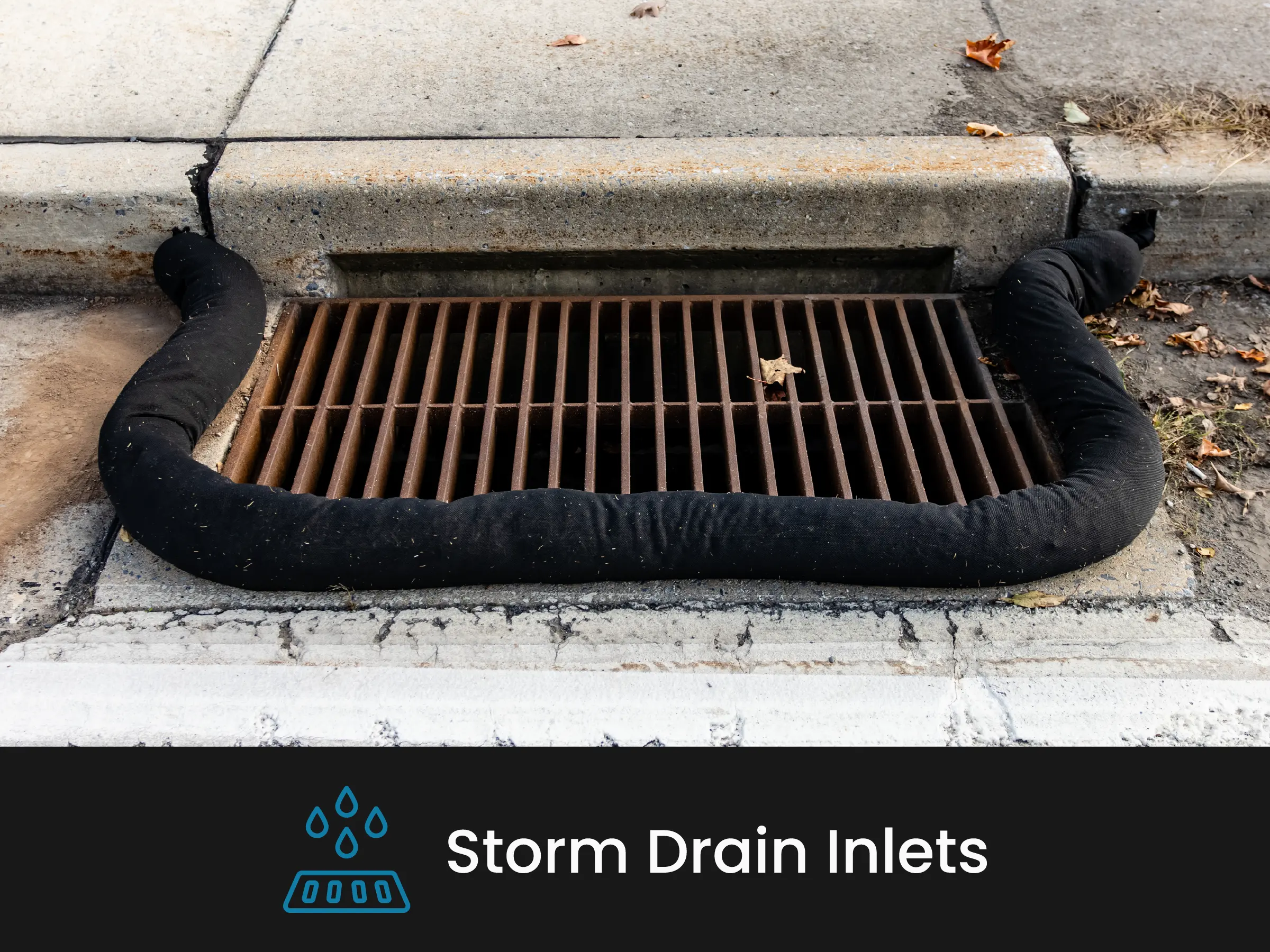
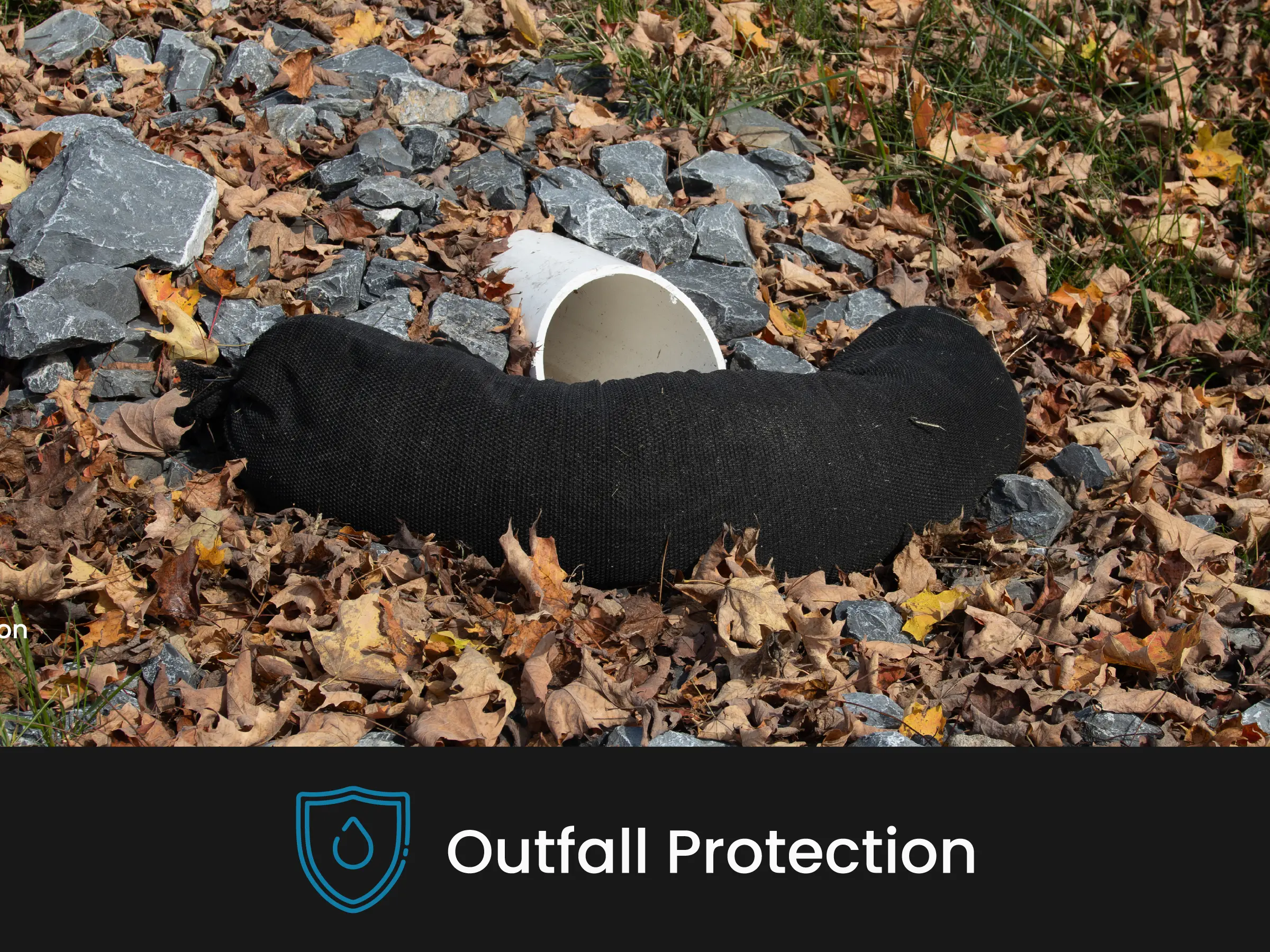
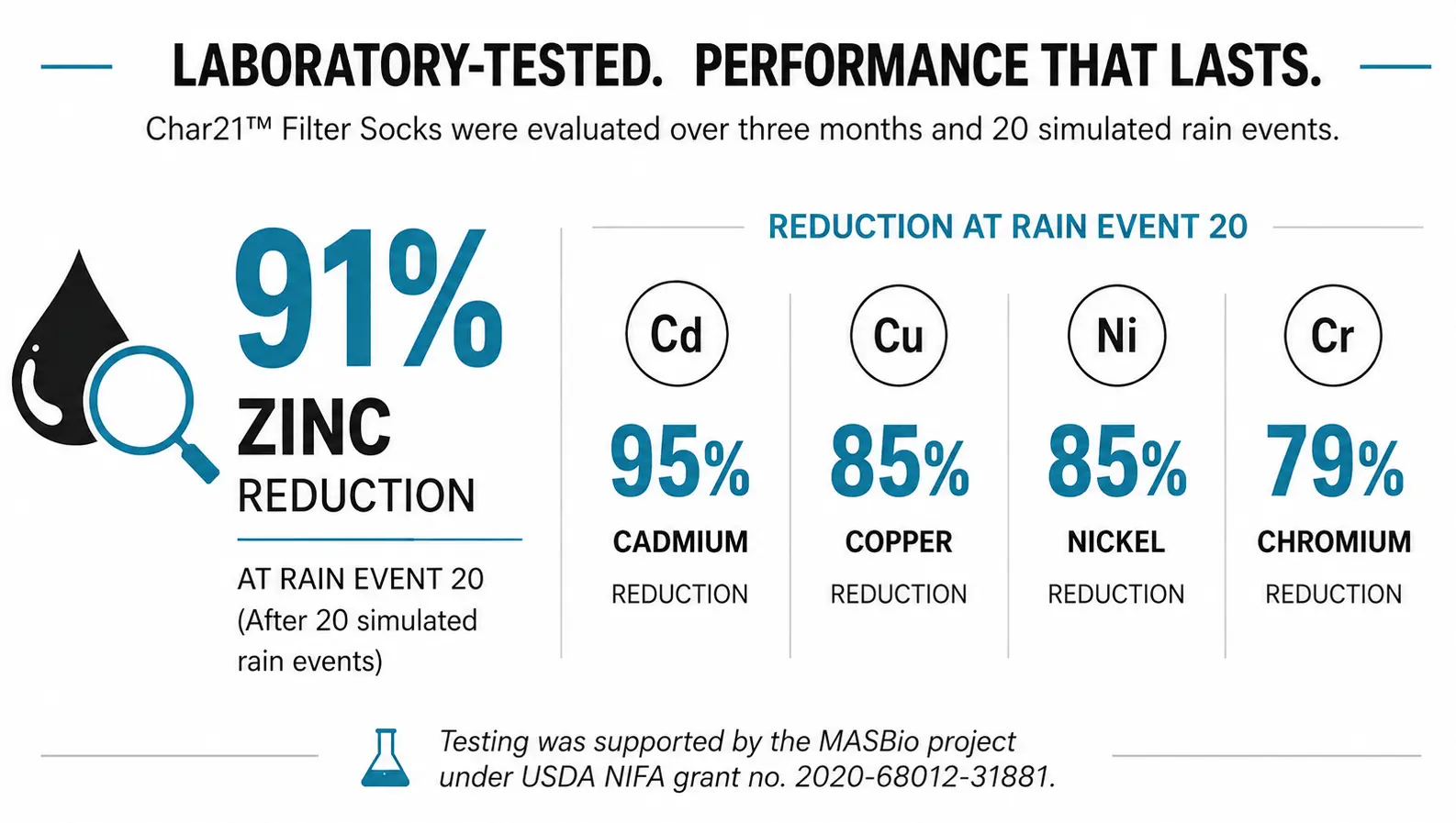
Stormtration® Char21™ Heavy Metal Filter Socks are designed specifically to reduce dissolved heavy metals, including zinc, while also capturing sediment and other stormwater pollutants. Laboratory testing demonstrated consistent heavy metal reduction over 20 simulated rain events, making Char21™ a practical stormwater BMP for facilities looking to lower zinc concentrations before discharge.
Results after 20 simulated rain events included:
- 91% zinc reduction
- 95% cadmium reduction
- 85% copper reduction
- 85% nickel reduction
- 79% chromium reduction
Managing Zinc Before It Leaves Your Site
Identifying sources of elevated zinc can be difficult, especially when they can’t be tied directly to a specific process or operation within the facility. Capturing runoff at downspouts, storm drains, and outfalls is often a practical and effective way to reduce zinc concentrations before runoff leaves the site.
When incorporated into a well-designed Stormwater Pollution Prevention Plan (SWPPP), targeted Best Management Practices (BMPs) can help facilities better manage zinc and other heavy metals in industrial stormwater runoff.
Learn More About Char21™
If zinc is showing up in your stormwater samples, Stormtration® Char21™ Heavy Metal Filter Socks provide a practical way to reduce dissolved zinc and other heavy metals before runoff leaves your site.
Related Articles
